Modernizing the Diagnosis of Vision Disorders
From glaucoma and retinal disease to neurological disorders, clinicians depend on objective measurements of visual function to support diagnosis and treatment. We helped redesign a specialized diagnostic platform used for PERG, ERG, and VEP testing, transforming complex datasets into a clearer, more intuitive experience that supports faster analysis and clinical decision-making.
Context & Problem
Looking Beyond the Surface
What began as a request to modernize the interface quickly became a broader effort to improve the entire clinical experience. Before designing new screens, our team immersed ourselves in the current workflow, observing how clinicians, technicians, and patients navigated the testing process from setup through interpretation.
Hands-on access to the hardware and software allowed us to experience the product firsthand while collaborating closely with industrial designers developing the next generation testing cart and device ecosystem.
Visuals: existing software, hardware, current workflow map
Process & Exploration
Understanding Clinical Workflows
To uncover opportunities, we immersed ourselves in the product ecosystem through clinician demonstrations, hands-on testing, competitive analysis, workflow mapping, and human factors evaluation. Working alongside the industrial design team, we documented pain points and identified opportunities to simplify complex testing procedures and reduce cognitive load.
Visuals: journey map, task analysis, opportunity map, experience principles
Solution
Reimagining the Diagnostic Experience
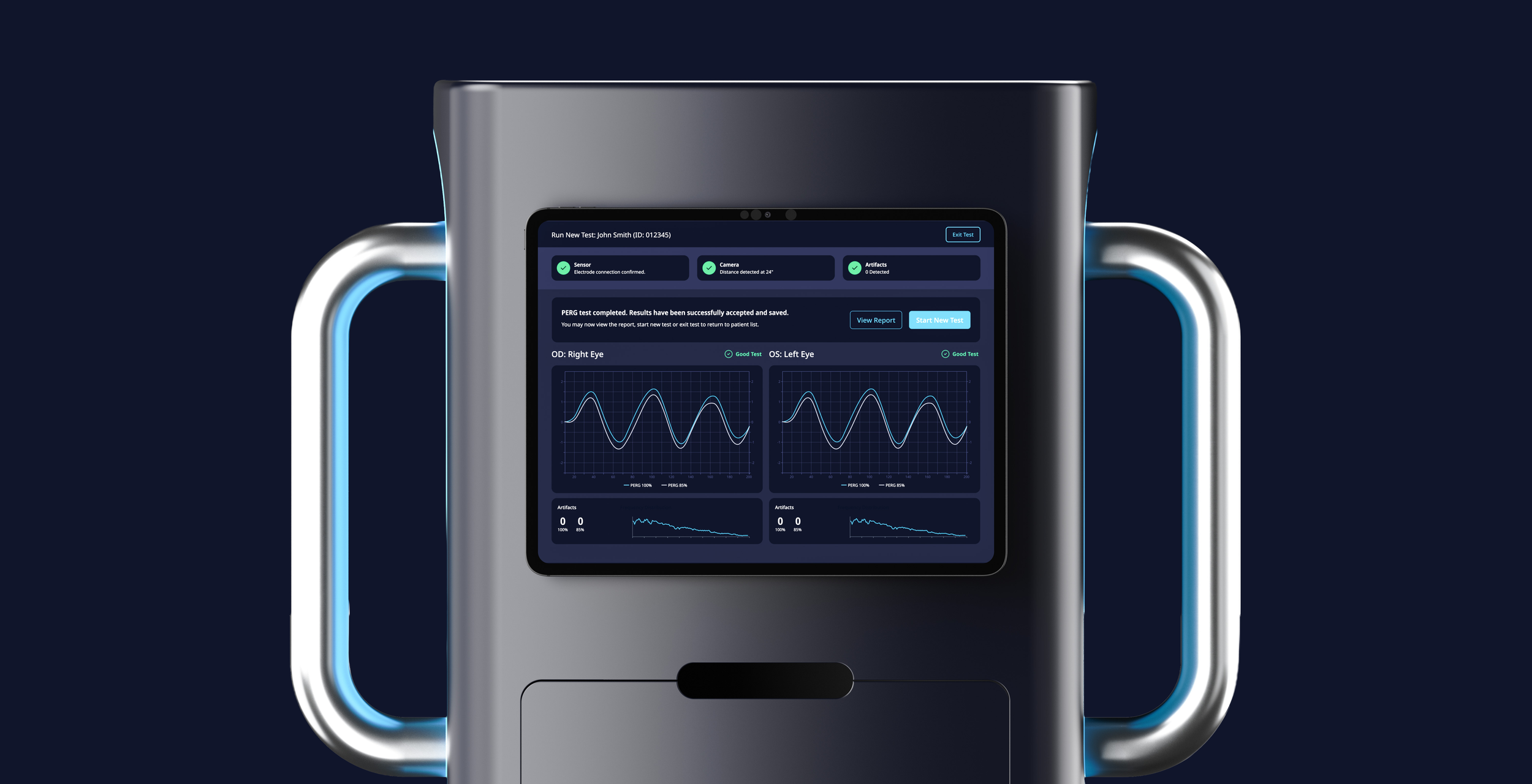
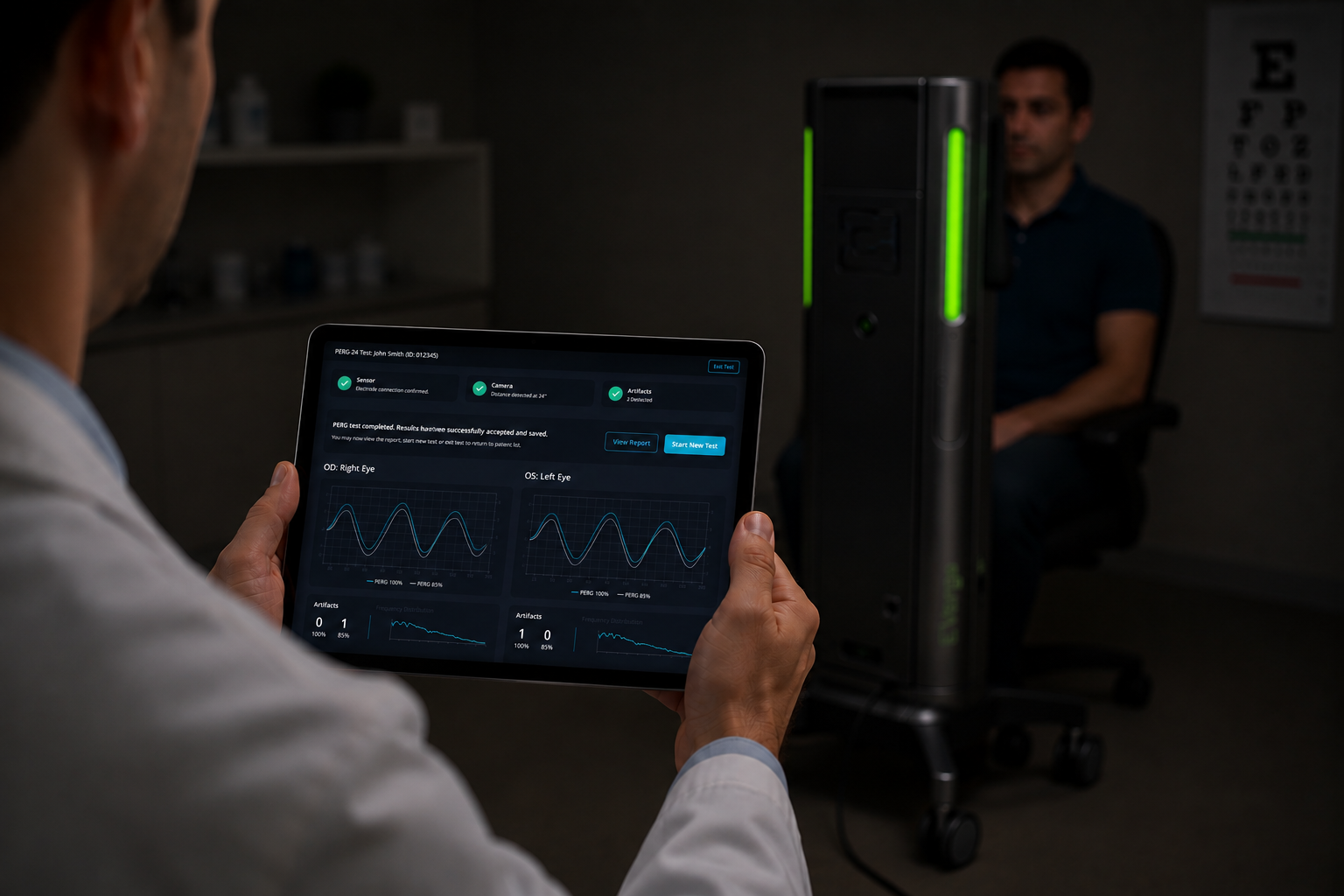
What began as a reskin evolved into a redesigned workflow optimized for modern clinical environments. We restructured navigation, streamlined task flows, developed a touch-first tablet experience, and established a scalable design system centered on clarity, readability, and clinical confidence.
Visuals: wireframes → final UI, tablet concepts, design system, before/after comparisons
Outcome & Impact
Establishing a Foundation for the Future
The engagement resulted in a validated future-state workflow, end-to-end screen designs, interactive prototype, and foundational design system. The work continues today through close collaboration with engineering teams as the next generation platform moves toward implementation.
Visuals: final prototype, implementation screenshots, design system components
Client: Global Vision Diagnostics Company
Role: Lead UX/UI Designer
Timeline: Jan-July 2026
Team: Human Factors, Industrial Design, Experience Design
Outputs: Clinical Workflow Journey Maps, Experience Vision & Design Principles, Diagnostic Concepts, UX/UI Design System, Interactive Prototypes